The Only Trend That Matters
Loading the Elevenlabs Text to Speech AudioNative Player...
The only trend that we all need to focus on and prepare for in the future is a trend called IRL. IRL stands for In Real Life. And the reason this will become the most important trend for us to prepare for is because everything with technology moves towards zero cost.
Why IRL Matters Now
There are three reasons this trend is starting to shape the way it is.
The first is that the way we add value to the world has to dramatically change as AI and converging technologies arrive on the scene. The second is that with the advent of AI, we are starting to trust the internet less and less and less. And third, we need to realise that this trend called the zero marginal cost society is starting to take shape and affect every single industry that we understand.
Why We Struggle to Act on What's Coming
There are two quotes I want to start with that explain why it's so difficult for us to grasp these technologies and act on them.
Einstein said it best: you cannot solve a problem from the same level of awareness that created it. Where we are today is a world stuck in an old awareness.
We were educated in it and built businesses in it. It's an awareness shaped by economies of scale and the Industrial Revolution. And that system is dissolving in front of our eyes.
Yet those same leaders, with the same awareness, are trying to make decisions about what comes next. It's almost impossible. The awareness is stuck in old ways of thinking.
Learning to Unlearn
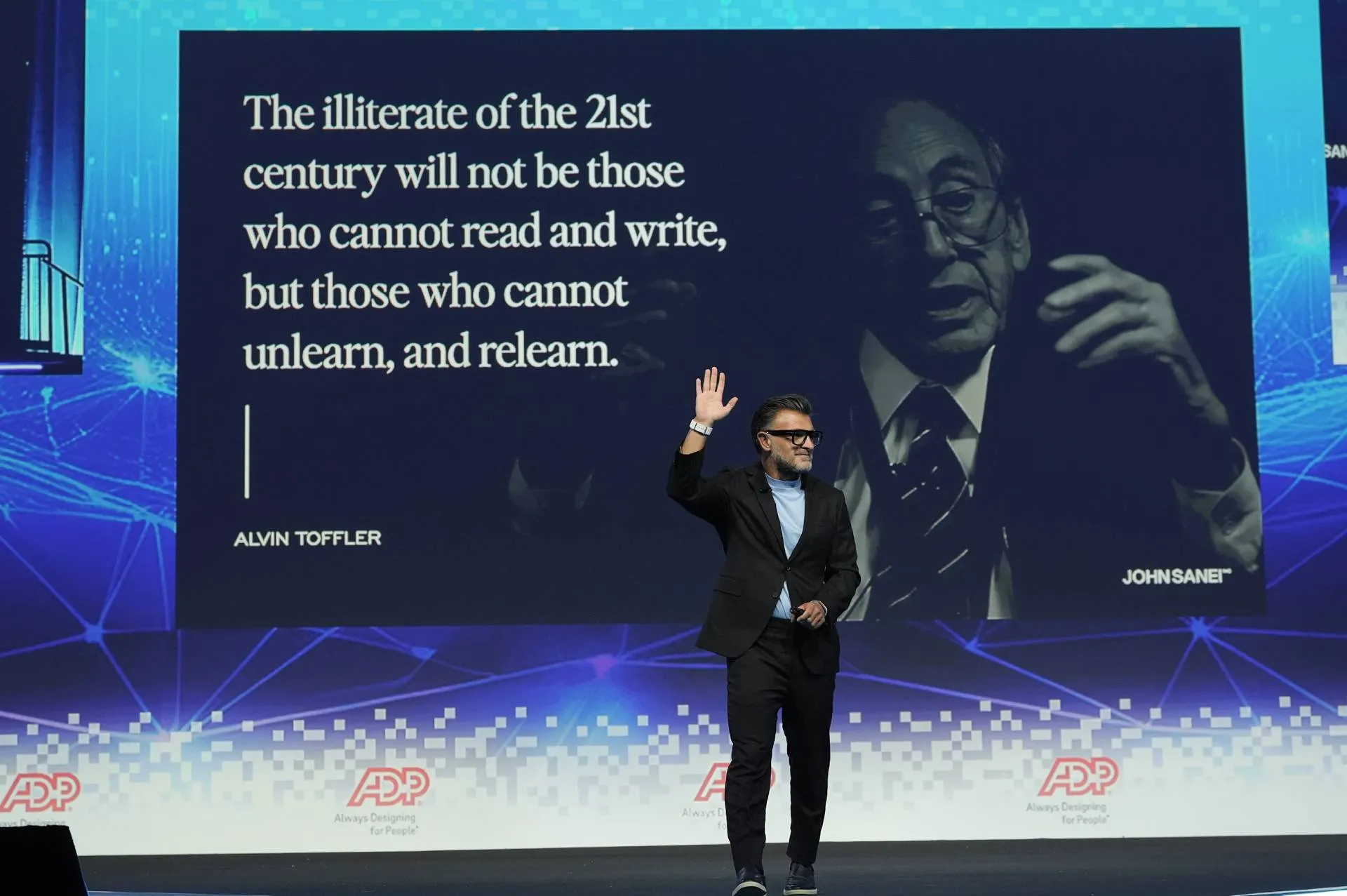
The second idea we have to take seriously is unlearning. Alvin Toffler said: The illiterate of the 21st century will not be the ones who cannot read or write, but the ones who cannot unlearn and relearn.
As human beings, we're excellent at learning, but terrible at unlearning. The reason it's so difficult is because unlearning requires you to let go of your identity in order to develop a new one. And the truth is, most of us are addicted to our identities.
As my favourite teacher, Dr Joe Dispenza, says: people become addicted to lives they don't even like. And they want to stay in lives they don't even like.
If we can't change our awareness, we can't prepare. If we can't let go of identity, we can't prepare.
Why the Brain Resists Change
So why is it so difficult for us to unlearn and shift awareness? The answer comes down to neuroscience.
Neuroscience shows that by the time we're 35 years old, we have between 60,000 and 70,000 thoughts a day. And 90% of those thoughts are exactly the same as yesterday. I know many dating bios say "spontaneous," but you're definitely not spontaneous. Our brains don't even want to be spontaneous.
Summary Takeaways:
The IRL (in real life) trend will be the most important focus for the future as technology reaches zero cost
We struggle to prepare for the future because we are stuck in an outdated awareness and identity
Unlearning old ways of thinking and developing a new identity is essential but incredibly difficult for most people
Our brains naturally resist change, with the majority of our daily thoughts being repetitive from the day before
Frequently Asked Questions
Q: What is the "IRL" trend and why is it important?
A: IRL stands for "In Real Life", and it refers to the trend that everything with technology is moving towards zero cost. This trend is important because it means the way we add value to the world needs to change dramatically as AI and other converging technologies become more prevalent.
Additionally, the rise of AI is causing people to trust the internet less, and the zero marginal cost society is affecting every industry.
Q: How can we overcome the challenges of unlearning and shifting our awareness?
A: Overcoming the challenges of unlearning and shifting our awareness is difficult because it requires letting go of our identity. We become addicted to our existing lives and ways of thinking, even if we don't like them. To change, we need to be willing to let go of our identities and develop new ones.
Q. What role does neuroscience play in our resistance to change?
A: Neuroscience shows that by the time we're 35 years old, we have between 60,000 and 70,000 thoughts a day, and 90% of those thoughts are exactly the same as the day before. Our brains are hardwired to resist change and crave repetition, which makes it very difficult for us to unlearn and relearn.
Conclusion
In a world moving at zero cost and exponential speed. Our advantage won't be found in technology, but our humanity. Presence, trust, experience, identity- all of these happen IRL.
To step into that future, we have to let go of the awareness that built the past. That means unlearning who we think we are, loosening our grip on old identities, and retraining a brain that craves repetition over change. The future doesn't need us to know more; it needs us to become different.
Note: This blog post is an adaptation of the transcript from the video below.


